From Addiction to Purpose: How Video Games Changed My Life – By Zack Edwards
By Xogos Gaming · July 10, 2026
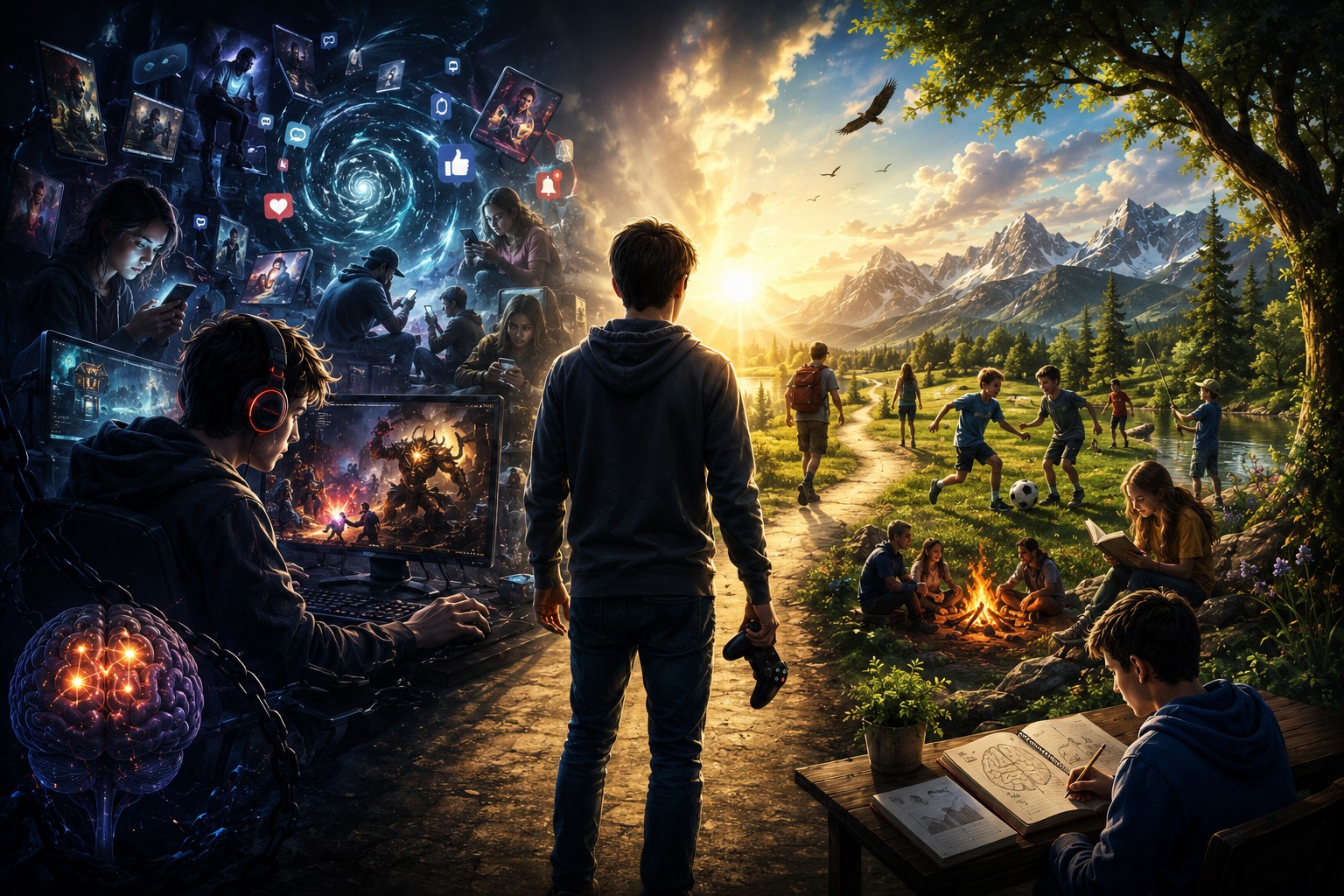
There was a time in my life when video games had far more control over me than I wanted to admit.
Like many young people, I loved gaming. The challenge, the excitement, the progression, and the sense of accomplishment kept me coming back day after day. It wasn't that video games were inherently bad—it was that they had become my default. Whenever I had free time, I found myself reaching for a controller instead of investing in things that would help me grow as a person.
The moment that changed everything happened while I was in college.
Ironically, I was trying to do something good. I had turned on a Christian devotional so I could listen while playing Diablo. I thought I was making productive use of my gaming time by learning spiritually while continuing to play.
But somewhere during that devotional, something clicked.
I realized that I wasn't really listening.
My attention kept drifting back to the game. Every battle, every piece of loot, every quest pulled my focus away from what I knew was more important. It was as if God was showing me that even though I wanted to grow spiritually, the game had become powerful enough to dominate my attention. I was listening to something about God, while being distracted by a game about the devil.
That realization hit me harder than I expected.
I understood that I didn't simply enjoy video games—they had become something I struggled to control.
My Brain Was Working Exactly as It Was Designed
As I learned more about neuroscience, I realized there was a reason games had such a powerful grip on me.
Our brains are wired to reward behaviors that help us survive and accomplish meaningful goals. When we solve a problem, achieve something difficult, discover something new, or receive positive social feedback, our brains release dopamine—a neurotransmitter involved in motivation, learning, and reinforcement. Dopamine doesn't simply create pleasure; it encourages us to repeat behaviors that our brains interpret as rewarding.
Modern video games and social media platforms have become exceptionally good at tapping into this system.
Every new achievement, rare item, unlocked level, notification, "like," comment, streak, or surprise reward creates anticipation that keeps us coming back. Many games use variable reward schedules—the same psychological principle used in slot machines—where players never know exactly when the next exciting reward will appear. That unpredictability can make experiences especially compelling because the brain keeps anticipating that the next action might produce something valuable.
Social media platforms work similarly. Infinite scrolling, personalized recommendations, autoplay videos, and constant notifications are designed to reduce stopping points and encourage users to continue engaging.
The longer people stay on a platform, the more opportunities there are for advertising, subscriptions, purchases, or other forms of monetization. Attention has become one of the world's most valuable resources, and many digital products are designed to compete for it.
I wasn't weak.
My brain was responding exactly as God designed it to respond to rewarding experiences.
The problem was that my attention had become attached to something that wasn't helping me become the person I wanted to be.
Walking Away Was Hard
One of the biggest misconceptions people have is that you can simply tell someone, "Just stop playing."
Anyone who has spent thousands of hours gaming knows it isn't that simple.
Games are designed to keep us engaged. They reward us constantly with achievements, new levels, unlocks, rankings, and exciting experiences. They create habits that become routines, and routines that become difficult to break.
Walking away felt like giving up a hobby I genuinely loved.
For many kids today, the challenge is even greater. Screens are everywhere. School assignments are online. Friends communicate through games. Entertainment is streamed. Even homework often requires a computer.
Expecting a teenager to go completely "cold turkey" from screens often isn't realistic.
The Answer Isn't Simply Taking Screens Away
One lesson I learned is that removing something enjoyable without replacing it usually doesn't last.
Nature dislikes a vacuum.
If a child spends five hours a day playing games and suddenly loses access to them, those five hours don't automatically become productive. Many children simply replace one screen with another.
Instead of asking, "How do we eliminate screens?" I believe parents should ask, "What can we replace them with?"
Can we replace meaningless scrolling with educational games?
Can we replace endless grinding with learning new skills?
Can we replace passive entertainment with creativity?
Can we replace digital-only friendships with real conversations?
Can we replace sitting indoors with exploring God's creation?
The goal isn't deprivation.
The goal is transformation.
Why Educational Games Matter
That realization eventually became one of the driving forces behind my work in educational gaming.
If students already enjoy interactive experiences, why not give them games that teach history, science, math, finance, writing, debate, geography, careers, and critical thinking?
Why not use the excitement that makes commercial games successful to help students become more curious, more confident, and more educated?
Learning doesn't have to feel like a punishment.
Games don't have to be mindless.
Technology can become a bridge that helps students move from entertainment toward education.
Educational games should encourage curiosity, problem solving, creativity, and lifelong learning rather than simply maximizing the amount of time someone spends staring at a screen.
Kids Still Need to Touch Grass
Even with educational games, I firmly believe children need far more than digital experiences.
They need sunshine.
They need fresh air.
They need dirt on their shoes.
They need to climb trees, hike trails, ride bicycles, throw footballs, fish, camp, garden, build forts, and simply explore.
They need to touch grass.
There is something remarkable about being outdoors that no screen can replace.
Research has consistently shown that spending time in nature can help reduce stress, improve attention, encourage physical activity, and support emotional well-being. For children especially, outdoor play develops balance, coordination, creativity, social skills, confidence, and resilience in ways that digital environments often cannot.
Some of my greatest childhood memories weren't made behind a monitor.
They happened outside with friends, exploring the woods, building things, and experiencing adventures that no video game could perfectly recreate.
The real world is still the greatest open-world game ever created.
Technology Should Be a Tool, Not a Master
I don't believe technology is the enemy.
Technology allows us to communicate across the globe, learn almost anything, and build incredible educational experiences that previous generations could only imagine.
But technology should always remain a tool.
The moment it begins controlling our schedules, our relationships, our priorities, or our attention, it deserves to be reevaluated.
Our attention is one of the most valuable gifts we have.
Where we consistently place it shapes who we become.
Finding Balance
Looking back, I'm grateful for that moment during college.
Listening to a Christian devotional while playing Diablo forced me to confront something I had been avoiding. It wasn't an easy realization, but it was one that ultimately changed the direction of my life.
Today, I still believe games can be an incredible force for good.
But only when they exist in balance with the rest of life.
Children need opportunities to learn, create, explore, build relationships, strengthen their faith, enjoy nature, exercise, read great books, and develop into healthy adults. Technology should support those goals—not replace them.
If my story can encourage even one student to find a healthier balance, or inspire one parent to help their child discover meaningful alternatives instead of simply taking screens away, then sharing it has been worthwhile.
Sometimes the greatest change in our lives begins with one honest moment—when we recognize that something we enjoy has become something that controls us.
For me, that moment happened while listening to a Christian devotional with Diablo running on my computer.
That experience changed my life.
It eventually led me to dedicate my career to creating games that help students grow instead of simply consuming their time.
My hope is that every child learns to master technology instead of allowing technology to master them—and that when the screen turns off, they'll discover that some of life's greatest adventures are still waiting just outside the front door.