Learning by Doing: Why Active Minds Learn Better Than Passive Ones
By My Learning Source · July 30, 2026
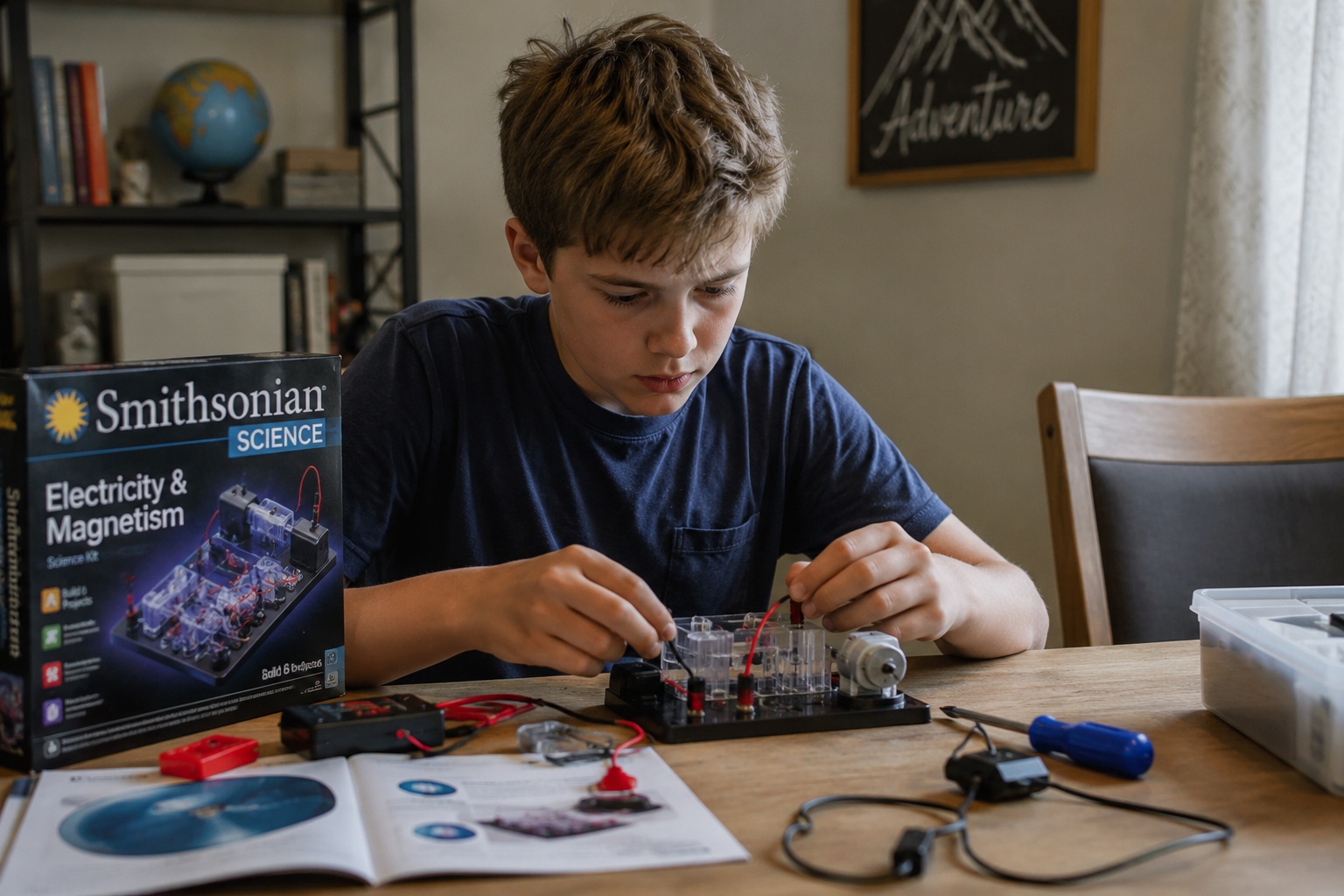
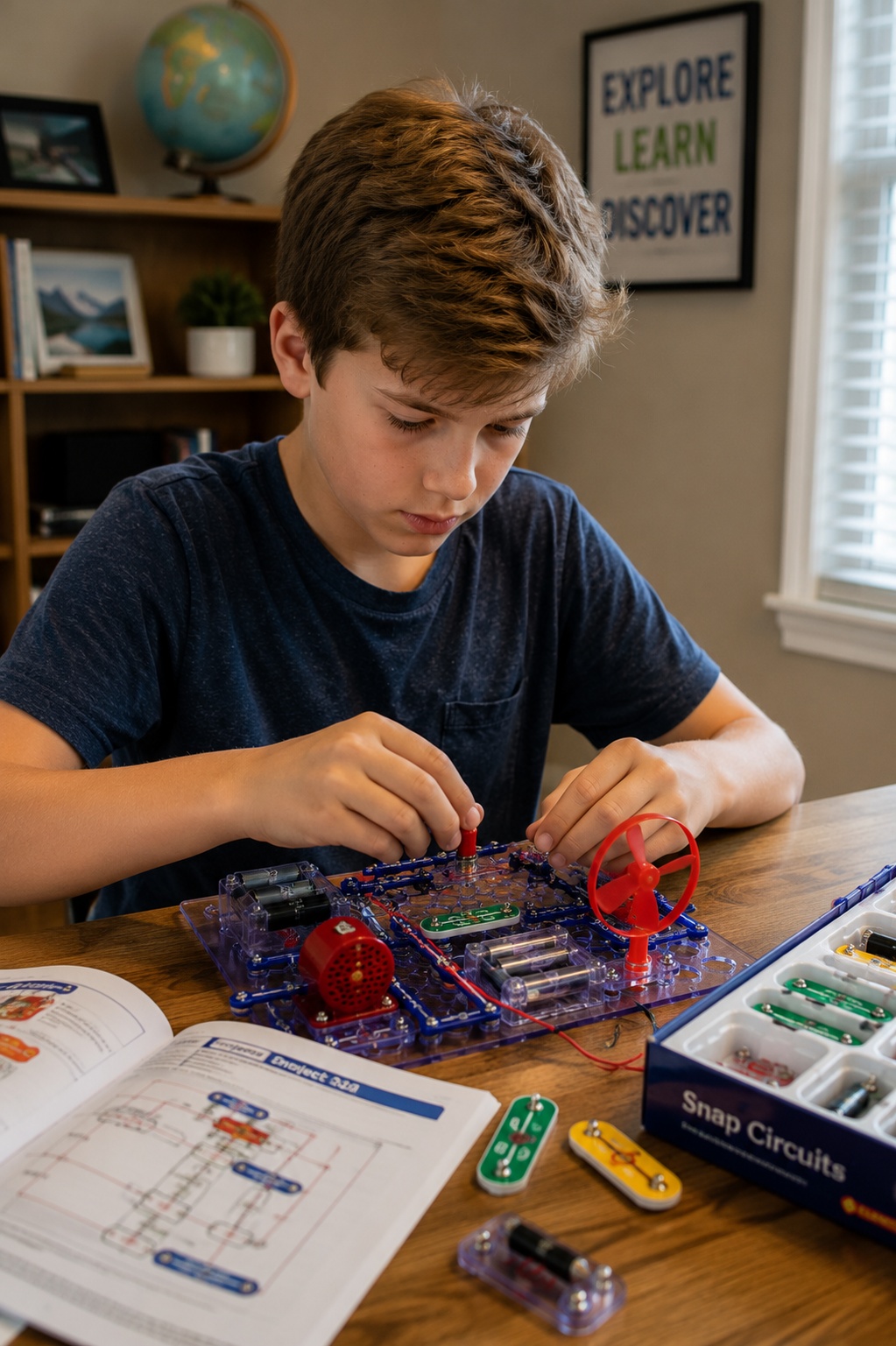
For generations, education has often been pictured the same way: students sitting quietly in rows, completing worksheets, memorizing information for the next test, and hoping they remember enough to earn a good grade. That model has produced many successful students, but modern research has increasingly shown that memorization alone is not the most effective path to long-term understanding. The human brain is designed to learn through experience, curiosity, movement, and meaningful engagement. When students actively participate in the learning process rather than simply receiving information, they retain more, understand concepts more deeply, and become better problem solvers.
The goal of education has never been to fill a student's mind with facts. It has always been to prepare that student to think, adapt, and thrive throughout life. Active learning is one of the most effective ways to accomplish that goal.
The Brain Was Built to Explore
From the moment children are born, they learn by interacting with the world around them. Infants do not master walking by watching videos about walking. They learn through repeated attempts, experimentation, failure, and success. The same principle continues throughout childhood.
Educational psychologists have long recognized that students construct knowledge by connecting new experiences to what they already know. Instead of passively receiving information, learners actively build mental models that help them understand increasingly complex ideas.
Research in cognitive science has shown that learning improves when students engage multiple parts of the brain simultaneously. Reading, discussing, building, experimenting, drawing, solving problems, and teaching others each activate different neural pathways. The more connections formed during learning, the easier it becomes to retrieve and apply that knowledge later.
Learning is not simply the storage of information.
It is the construction of understanding.
Engagement Strengthens Memory
One of the most consistent findings in educational research is that students remember information better when they are actively involved in learning.
Studies on active learning have found improvements in student achievement across numerous grade levels and academic subjects. Rather than listening passively to information, students who participate in discussions, experiments, projects, simulations, and collaborative problem solving generally demonstrate stronger comprehension and longer-lasting retention.
Neuroscience offers an explanation. When learners are emotionally invested and intellectually engaged, the brain releases neurotransmitters associated with attention and memory formation. These chemical processes help strengthen the neural connections that support long-term learning.
Simply put, engaged brains remember more.
Hands-On Learning Makes Abstract Ideas Real
Many academic concepts can seem distant until students experience them firsthand.
Engineering becomes meaningful when students build bridges from simple materials and discover why certain designs fail.
Science becomes memorable when students conduct experiments instead of merely reading about them.
Mathematics becomes practical when learners apply it to real-world challenges involving construction, budgeting, measurement, or design.
History comes alive when students recreate historical inventions, maps, or artifacts.
Hands-on learning transforms abstract information into personal experience.
Rather than asking students to memorize facts, it invites them to investigate, discover, and create.
Critical Thinking Is Learned Through Challenge
The modern world presents students with an overwhelming amount of information. The challenge is no longer finding answers—it is determining which answers deserve to be trusted.
Critical thinking develops when students encounter problems that require analysis rather than memorization.
Instead of asking, "What is the correct answer?" active learners begin asking:
- Why did this happen?
- What evidence supports this conclusion?
- Could there be another explanation?
- What happens if I try a different approach?
These questions strengthen reasoning skills that extend far beyond school.
Whether evaluating scientific claims, comparing financial choices, troubleshooting technology, or making everyday decisions, critical thinking allows individuals to make informed judgments instead of accepting information at face value.
Engineering Teaches Persistence
Engineering is often described as the process of solving problems through design.
Students quickly discover that successful engineering rarely happens on the first attempt.
Designs fail.
Structures collapse.
Programs contain bugs.
Experiments produce unexpected results.
Far from discouraging students, these moments become some of the most valuable learning experiences. They teach perseverance, adaptability, and resilience.
Educational research has found that students participating in engineering design activities often develop stronger problem-solving abilities because they repeatedly move through a cycle of planning, testing, evaluating, and improving.
Failure becomes feedback.
Improvement becomes the goal.
Logic Builds Better Decision Makers
Logical reasoning forms the foundation of mathematics, computer science, engineering, philosophy, and everyday decision making.
Activities involving puzzles, coding, sequencing, strategy games, and structured reasoning help students recognize patterns, identify relationships, and draw sound conclusions from available evidence.
These skills strengthen executive functioning—the brain's ability to plan, organize, prioritize, and regulate behavior.
Students who regularly practice logical thinking often become more confident when approaching unfamiliar challenges because they learn that even complicated problems can be solved one step at a time.
Creativity and Innovation Go Hand in Hand
Some people mistakenly separate creativity from academic achievement.
In reality, innovation depends on creativity.
Every invention began as someone's idea.
Every scientific breakthrough started with a question.
Every technological advancement required someone willing to imagine a better solution.
Creative learning encourages students to explore multiple possibilities instead of searching for only one acceptable answer.
This flexibility prepares young people to solve problems that have never existed before.
Independent Learning Creates Lifelong Learners
One of education's greatest successes occurs when students no longer need someone telling them to learn.
Independent learners ask questions because they are curious.
They seek answers because they enjoy discovery.
They pursue knowledge because they recognize its value.
Research on student motivation consistently shows that learners develop stronger intrinsic motivation when they experience autonomy, competence, and purpose. When students are trusted to investigate, experiment, and make meaningful choices, they often become more invested in their own education.
The goal is not merely completing assignments.
It is developing a lifelong love of learning.
Educational Games Turn Practice Into Discovery
Games have become an increasingly important tool in modern education because they combine challenge, immediate feedback, and sustained engagement.
High-quality educational games ask students to solve problems, recognize patterns, apply knowledge, and adjust strategies while remaining motivated to continue.
Research on game-based learning suggests that thoughtfully designed educational games can improve motivation, increase time spent practicing skills, and strengthen knowledge retention compared with repetitive drills alone. When learning feels like exploration rather than obligation, students are often willing to spend significantly more time mastering difficult concepts.
The game itself becomes a vehicle for learning.
Practical Life Skills Make Learning Relevant
Students naturally ask one important question:
"When will I ever use this?"
Education becomes far more meaningful when learners see direct connections between classroom concepts and everyday life.
Budgeting teaches mathematics.
Cooking reinforces measurement and chemistry.
Gardening introduces biology and environmental science.
Building furniture applies geometry and engineering.
Programming develops logic and computational thinking.
Learning becomes relevant because students experience its practical value.
Knowledge that can be applied is knowledge that is remembered.
A Philosophy Built Around Active Learning
One homeschool curriculum company that has embraced these research-supported principles is Timberdoodle. Rather than centering its educational approach primarily on worksheets and memorization, the company has built its curriculum around the belief that children learn best when they are actively engaged in the learning process.
Its curriculum selections emphasize hands-on learning, critical thinking, engineering, logic, creativity, independent learning, educational games, and practical life skills. Instead of simply asking students to consume information, many of its resources encourage them to build, solve, create, experiment, and discover. The company curates materials from a wide range of publishers with the goal of providing learning experiences that challenge students intellectually while keeping them actively involved.
This philosophy reflects many of the conclusions emerging from modern educational research. Students tend to retain more when they participate. They develop stronger reasoning skills when they solve authentic problems. They become more independent when curiosity drives their learning. And perhaps most importantly, they often discover that education is not something to endure—it is something to enjoy.
Active learning is not a passing educational trend. It is a return to one of the oldest truths about human development: people learn best when their minds, hands, and imaginations are all working together.