Meet Students Where They Are: The Secret to Making History Come Alive
By Xogos Gaming · July 30, 2026 · STEM, History, Announcements
Every Student Learns Differently
One of the biggest mistakes adults make when teaching history is assuming every student learns the same way. Some students can sit down with a textbook and absorb every page. Others struggle to make it through a single chapter without losing focus. Some remember every date after hearing a lecture, while others won't remember much unless they experience history through activities, games, discussions, or hands-on projects.
The good news is that history is one of the most flexible subjects to teach. Every civilization, every war, every invention, every explorer, and every great leader has a story worth telling. The challenge isn't making history interesting—it already is. The challenge is presenting it in a way that matches how each individual student learns best.
Instead of trying to force students into one style of learning, successful parents and teachers learn to meet students where they are and build from there.
Step 1: Discover What Your Student Loves
Before choosing a curriculum or opening a history book, take time to learn about your student's interests.
· Do they enjoy video games?
· Do they prefer board games?
· Are they fascinated by sports?
· Do they enjoy drawing?
· Building with LEGO® bricks?
· Cooking?
· Reading novels?
· Watching documentaries?
· Creating videos?
· Exploring nature?
Every interest becomes a doorway into learning.
A student who enjoys strategy games may love studying military history.
A student who enjoys building may become fascinated by ancient engineering.
A child who loves animals may become interested in the role horses, elephants, dogs, or carrier pigeons played throughout history.
Students become motivated when they see connections between what they already enjoy and what they are learning.
Instead of asking, "How do I make history interesting?" ask, "How can history connect with what my child already enjoys?"
Step 2: Discover How Your Student Learns Best
Every brain processes information differently. Some students remember nearly everything they read. Others need to hear information explained aloud. Some remember best by watching videos. Others need to physically do something before the lesson truly sticks.
Educational research suggests that learning is often strongest when students actively engage with material rather than passively receiving it. The goal is not to label students permanently but to discover which methods seem to help them stay engaged and remember what they learn.
Ask questions like:
- Does my student enjoy reading?
- Do they enjoy listening to stories?
- Do they enjoy discussions?
- Do they enjoy documentaries?
- Do they enjoy educational games?
- Do they enjoy building models?
- Do they enjoy teaching others what they learned?
Many students benefit from combining several approaches instead of relying on just one. Reading followed by discussion, games followed by writing, or videos followed by hands-on projects can make learning more memorable than any single method alone.
Step 3: Find Your Student's Favorite Subject
History rarely exists by itself. Students often have one subject they naturally enjoy more than others.
· Maybe it's science.
· Maybe it's math.
· Maybe it's art.
· Maybe it's English.
· Maybe it's technology.
Whatever that favorite subject is, it can become a bridge into history. A student who loves science can explore the engineering of Roman aqueducts, the physics of medieval castles, or the medical discoveries of the Renaissance.
A student who enjoys math can calculate military logistics, population growth, trade routes, or economic changes throughout history.
An artist can recreate ancient paintings, architecture, clothing, or maps.
A writer can journal as if they lived during the American Revolution or Ancient Egypt.
When students discover that history connects to subjects they already love, history stops becoming an isolated class and becomes part of a much bigger story.
Step 4: Choose Educational Tools That Match Your Student
Once you know what interests your student and how they learn best, selecting educational resources becomes much easier.
Instead of asking whether a curriculum is popular, ask whether it matches your student's learning style.
Look for resources that fit your child's strengths.
· If they enjoy reading, find engaging historical biographies and historical fiction.
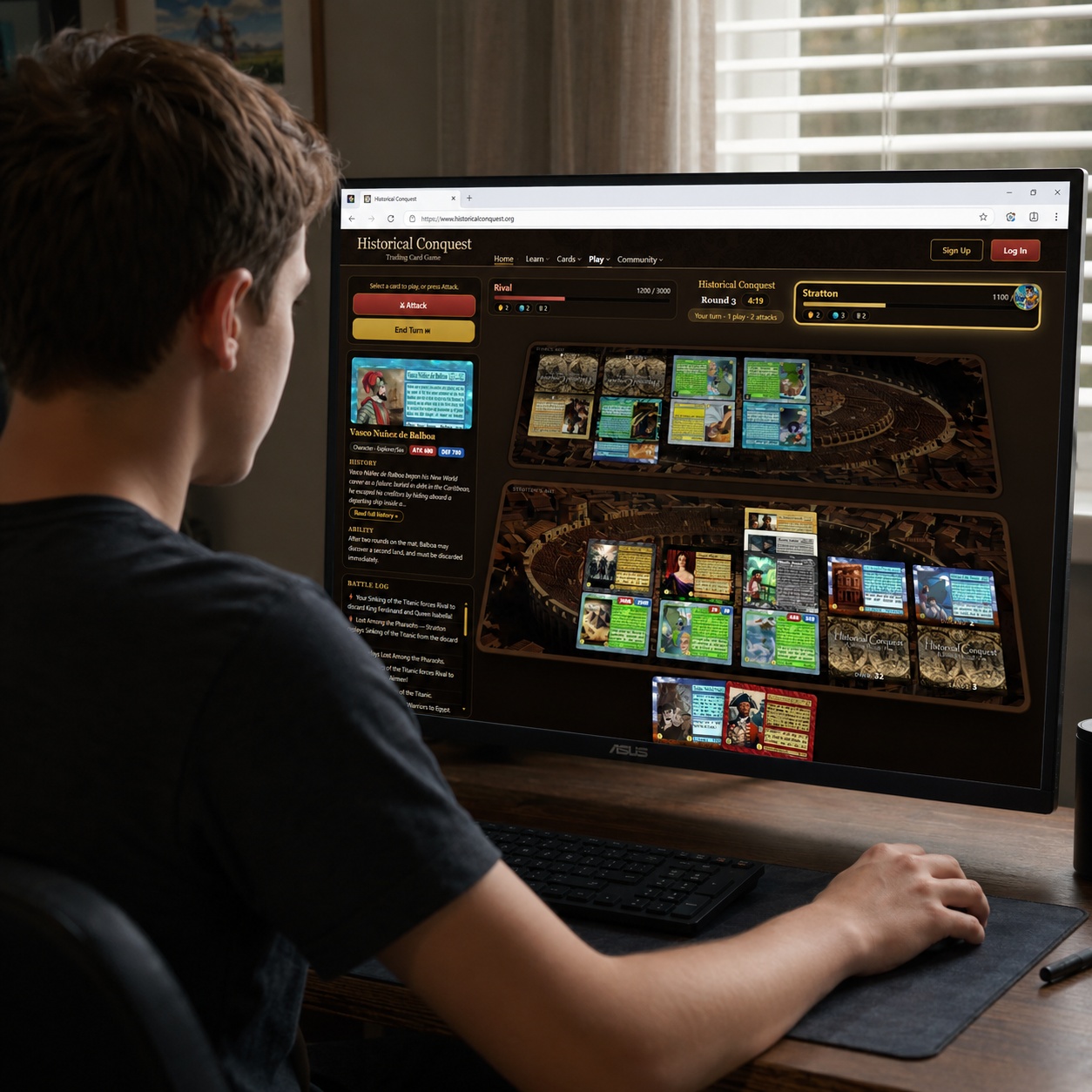
· If they enjoy games, use educational board games, card games, or digital games.
· If they enjoy hands-on activities, find historical crafts, experiments, cooking projects, or model building.
· If they enjoy videos, supplement reading with quality documentaries and educational media.
· If they enjoy discussion, participate in family conversations about historical decisions and events.
The best curriculum is often not the one with the most pages or the highest price tag. It is the one that keeps your student curious enough to continue learning.
Step 5 (Optional): Blend Subjects Through Cross-Curricular Learning
One of the most effective ways to improve engagement is by connecting history with other academic subjects. This approach is called cross-curricular learning.
Rather than teaching each subject separately, students discover how knowledge works together in the real world.
History can naturally connect with:
· Science through inventions, medicine, astronomy, geology, and environmental change.
· Mathematics through architecture, engineering, economics, navigation, trade, and statistics.
· English through biographies, speeches, persuasive writing, historical fiction, and primary source documents.
· Art through painting, sculpture, architecture, music, and design.
· Geography through exploration, climate, maps, trade routes, and natural resources.
· Economics through markets, innovation, banking, and entrepreneurship.
Students begin to understand that history is not simply about memorizing dates. It is the story of how every academic subject helped shape the world we live in today.
Bringing It All Together
When parents and teachers understand what motivates a student, learning becomes far less of a struggle.
Students are more engaged when lessons connect with their interests.
They retain more information when lessons match the ways they naturally learn.
They become more curious when subjects connect with one another.
Instead of forcing students to adapt to a curriculum, great educators often adapt the curriculum to reach the student.
That simple shift can transform a reluctant learner into an enthusiastic one.
The Philosophy Behind Xogos
This philosophy is exactly how Xogos was developed.
We recognized that many students today are already spending time on computers, tablets, and other digital devices. Rather than pretending technology isn't part of their world, we decided to meet students where they already are.
Instead of using screens simply to entertain, Xogos uses games to introduce history, science, mathematics, geography, personal finance, language arts, and many other subjects in engaging ways. Our goal is to weave learning naturally into enjoyable gameplay so students stay curious while building knowledge and skills.
But learning shouldn't stop when the screen turns off.
That is why Xogos also encourages students to step away from their devices and participate in real-world activities that help them grow. Whether spending time outdoors, completing hands-on projects, reading books, serving others, exercising, or learning alongside family members, students are encouraged to apply what they have learned beyond the game itself.
Welcome to Historical Conquest Digital, our Newest Game
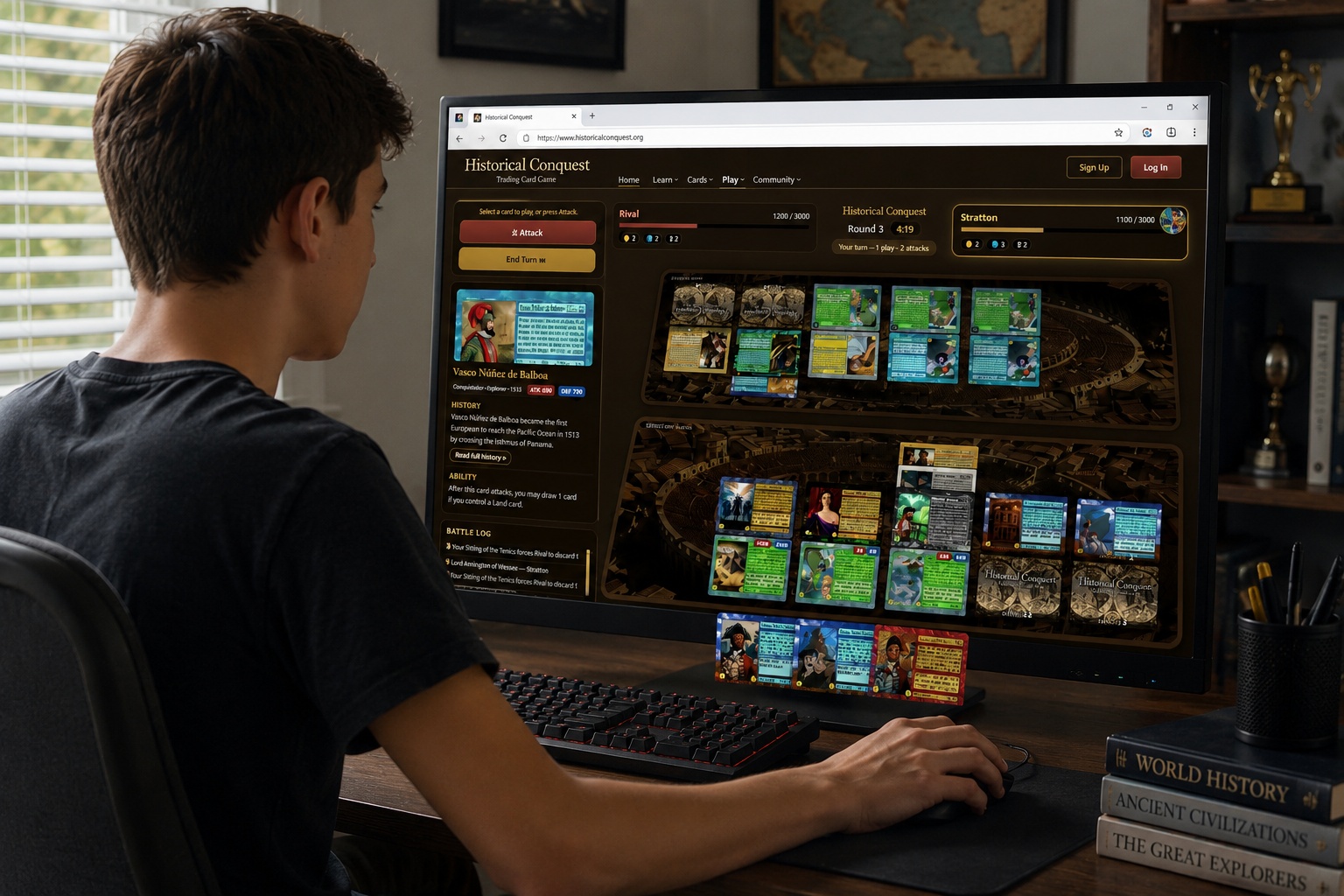
In partnership with Historical Conquest LLC, Xogos has also introduced Historical Conquest Digital, an online strategy card game that brings history to life in an entirely new way. Instead of simply reading about historical figures, students collect them, build strategies around them, and experience their strengths, weaknesses, achievements, and historical significance through gameplay.
Educational research has long shown that emotional engagement improves attention and memory, and by creating positive emotional connections with the people and events of history, students become more invested in learning what really happened. When a player has led Harriet Tubman, Julius Caesar, Joan of Arc, George Washington, or countless other historical figures to victory in a game, those names are no longer just words in a textbook—they become memorable individuals with stories worth exploring.
Our hope is that Historical Conquest Digital serves as a bridge between exciting gameplay and a lifelong curiosity about the remarkable people who shaped our world.