Meet Them Where They Are: How to Discover What Actually Motivates Your Student
By Xogos Gaming · August 30, 2026 · Curriculum, Games, Family
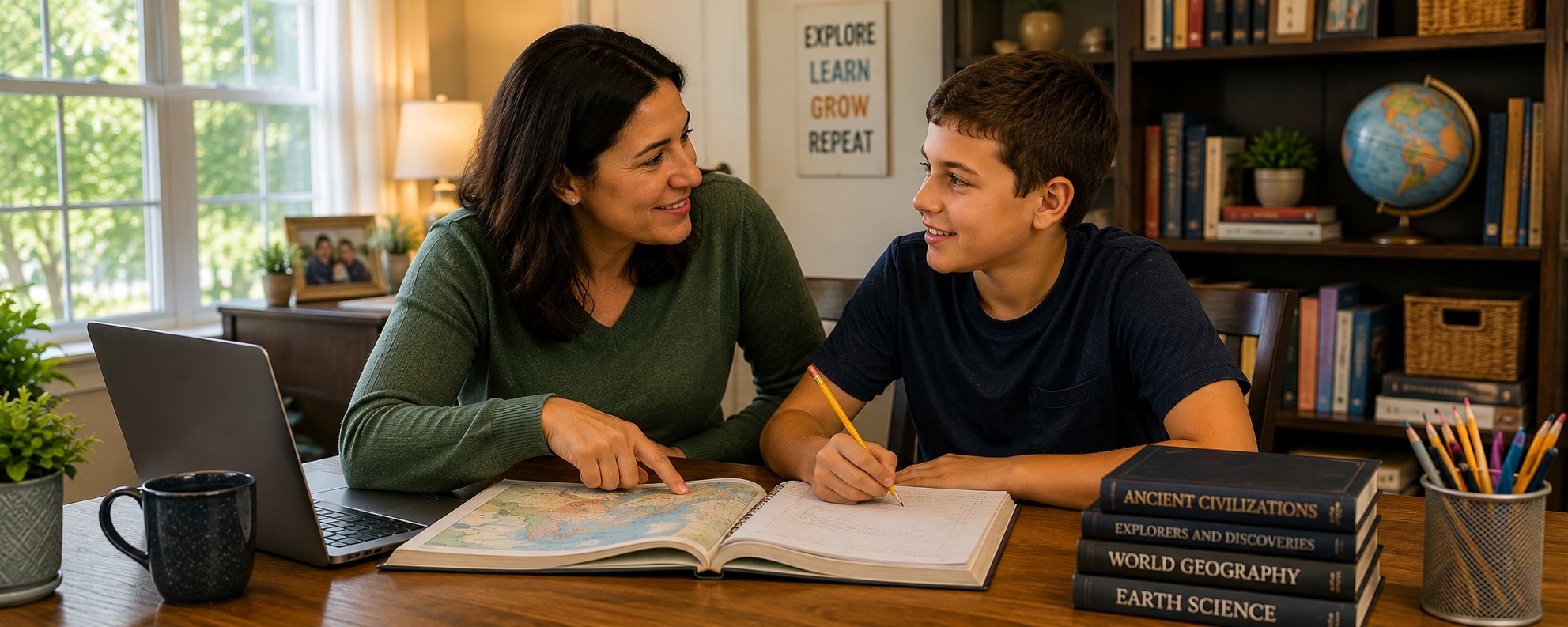
Have you ever watched a student struggle to concentrate on a lesson for twenty minutes, only to spend hours completely focused on a video game, sport, art project, animal, or building project?
Maybe the problem isn't motivation. Maybe we haven't connected education to what already motivates them.
Students still need to learn subjects they don't particularly enjoy, but parents and educators can make that process much easier by discovering what captures a child's imagination and using it as a doorway into education. That is what I mean by meeting students where they are.
The Science of Motivation
Psychologists distinguish between intrinsic motivation—doing something because we find it interesting or satisfying—and extrinsic motivation, which comes from rewards such as grades, prizes, recognition, or privileges.
Research into motivation also points toward the importance of autonomy, competence, and relationships. Students are often more motivated when they have some ownership over what they're doing, can see themselves improving, and feel connected to others.
Games naturally use many of these principles. Players make choices, overcome challenges, receive immediate feedback, improve their abilities, and see progress. Education can borrow these principles without turning every lesson into a video game.
The first step is simply asking: What does my student already love?
Sports? Video games? Art? Animals? Building? Music? Competition? Stories? Technology? Cooking?
Then ask why. A child who loves sports may really love competition and statistics. A Minecraft fan may enjoy building, engineering, exploration, and creativity. A child fascinated by animals has a natural doorway into biology and environmental science.
The interest doesn't have to become the curriculum. It becomes the doorway into the curriculum.
A Card Game Changed How I Learned
I know this because it happened to me.
I've always been project-oriented. When I entered college, I was earning Bs, some As, and, if I remember correctly, one C. I could do the work, but I wasn't the best student.
Then an English professor asked us to write a one-page essay describing a product we could create in a dorm-room setting that might change our lives.
Years earlier, I had loved playing Magic: The Gathering. My mother disliked some of the gruesome imagery on the cards, and when I was 16, she negotiated with me to get rid of my collection before receiving my Eagle Scout and gaining the driving freedom I desperately wanted. I wanted to pick up my own dates instead of having Mom drive us, so the cards went.
Years later, sitting in that college English class, card games came back into my life in a completely different way.
I loved games, adventure, entrepreneurship, and inventions. Ironically, I hated history. So I asked: What if I created a history-based card game?
That idea became Historical Conquest.
Suddenly every class mattered. Math helped develop game mechanics. English improved my writing. Marketing helped me understand customers. Business helped me develop the company. And history provided the people, civilizations, inventions, and events for the game.
After that assignment, I ended up earning straight As. I didn't suddenly receive a different brain. I finally had a reason to listen.
Research into curiosity and memory helps explain why this can happen. When we genuinely want an answer, our attention changes, and curiosity can improve subsequent learning and memory. Instead of merely receiving information, we are searching for it.
Then I Became a Father
Years later, this became much more personal.
Like many parents, I watched my children spend more and more time on screens—YouTube, Pinterest, which was one of the few social-media-style platforms we allowed, and especially Roblox.
I became increasingly concerned as I learned more about the risks children can encounter in large online environments, including inappropriate contact, scams, bullying, and exploitation. Then my own son became the target of online trolling.
Suddenly this wasn't an abstract debate about screen time.
These were my children.
I knew something had to change.
But I didn't believe the answer was simply taking technology away forever. My children would grow up in a world of computers, artificial intelligence, digital communication, and technology-driven careers. They needed to learn how to use technology responsibly.
Instead, I began asking a different question:
What if I could give them somewhere better to go?
That question became part of the development of Xogos Gaming.
What If the Game Was Also the Lesson?
Instead of constantly telling children to stop playing and start learning, what if sometimes we could say, "Keep playing—you are learning"?
Imagine an adventure game where mathematics is part of progressing through the adventure. Or a geology game with the exploration and discovery of a 2D sandbox game, where students dig through the Earth and learn about rocks, minerals, and geological processes as they play.
The same idea can extend into history, biology, environmental science, geography, personal finance, medical science, literature, and many other K–12 subjects.
The game shouldn't merely be a worksheet with points attached to it. The learning should become part of the gameplay.
Turn Their Interests Into Educational Doorways
Parents can use this philosophy without technology, too. If your student loves sports, use statistics, physics, anatomy, geography, and sports history. If they love animals, explore biology, ecosystems, genetics, and environmental science. If they love art, illustrate historical events, anatomy, architecture, or scientific concepts.
If they love building, give them something to engineer. Build a bridge and test its strength. Construct an aqueduct. Design a castle. Build a model ecosystem.
Then, when it doesn't work, ask: "Why did it fail?"
Now the student wants the science because science might solve their problem.
Parents can also give students some ownership. Instead of always saying, "Write a report about the American Revolution," you might say, "Show me that you understand the American Revolution. You can write a report, create a newspaper from 1776, make a presentation, design a game, or teach the family."
The educational objective remains the same, but the student has some control over how they reach it.
Xogos Was Built for My Kids, Too
This is one of the most important things I want parents to understand about Xogos.
I didn't build this only for somebody else's children. I built it for mine.
I'm a father who watched his children gravitate toward screens. I'm a father who became concerned about what they could encounter in massive online gaming environments. I'm a father whose son experienced online trolling. But I'm also a father who knows technology will be an important part of my children's future.
I wanted a better alternative.
Xogos is being developed as a youth-focused educational environment where students can play, explore, compete, learn, and have adventures without designing the experience around open interaction with the wider internet. I want my children—and other students—to have fun, but I also want them to walk away knowing more than they did when they logged in.
Historical Conquest began because someone finally connected education with something I already loved. A card game became my doorway into history, and a project changed the way I approached college.
Your student's doorway might be sports, horses, robotics, music, art, Minecraft, business, coding, space, nature, storytelling, or games.
Don't dismiss their interests because they don't immediately look educational.
Ask instead: "What could we teach through this?"
You might discover your child was never unmotivated. You simply hadn't found the right doorway.
And for students motivated by games, adventure, technology, engaging courses, achievement, or opportunities to work toward scholarships, that is the kind of doorway we are building through Xogos Gaming.
Meet students where they are—and use what they already love to show them how far learning can take them.